



Views: 0 Author: Site Editor Publish Time: 2026-08-03 Origin: Site


Supermarkets today face razor-thin margins and persistent labor shortages. Evolving shopper demands for frictionless experiences put immense pressure on operations. The checkout lane remains the primary bottleneck for most retailers. It heavily impacts both operational efficiency and overall customer satisfaction. Shoppers simply abandon carts if checkout lines stall.
Store managers must objectively evaluate their current checkout architectures. You need to weigh traditional cashier-led setups against modern self-service hardware. Our objective is to identify the most effective deployment strategy. We will explore how hybrid approaches deliver the highest verifiable performance. You can achieve this without compromising store security or shopper experience.
Read on to discover actionable strategies for your retail environment. You will learn exactly how to map your store footprint efficiently. We also provide a comprehensive evaluation framework to simplify your next hardware upgrade.
Traditional systems excel in processing high-volume, large-basket transactions and managing complex age-restricted items, but carry high ongoing labor costs.
Self-service technologies significantly reduce labor dependency and optimize floor space, though they introduce distinct challenges in loss prevention (shrink) and hardware maintenance.
The most resilient strategy for modern supermarkets is rarely binary; deploying an All In One POS architecture allows for flexible, hybrid checkout environments.
Successful implementation requires a phased rollout, prioritizing inventory sync, physical footprint design, and transitioning cashiers into customer-assistance roles.
Balancing cashier wages against operational efficiency creates constant tension. Retailers struggle to maintain adequate staffing during sudden peak hours. You cannot easily predict when a massive rush will occur. Unmanned registers frustrate shoppers waiting in long lines. Abandoned carts directly damage your daily revenue. Store managers constantly juggle schedule optimizations just to keep lines moving smoothly.
Changing consumer baselines further complicate this checkout dilemma. A stark demographic split exists among modern grocery shoppers. Many younger consumers demand absolute zero-interaction speed. They want to scan, tap, and leave instantly. Conversely, older demographics often expect traditional, full-service bagging. They value polite interactions and personalized customer service. Relying strictly on one method alienates a massive segment of your customer base.
Store operators must define clear success criteria for any hardware upgrades. What does a successful deployment actually look like? You should measure success through highly specific performance indicators. Reduced queue times stand as the most visible metric. Lower labor dependency per transaction is another crucial goal. Finally, stabilizing shrink rates remains a top priority. A successful system balances high transaction speed without increasing theft.
A traditional supermarket POS system provides distinct operational strengths. It excels heavily at handling large-basket transactions. Complex checkouts require human intuition and physical dexterity. Cashiers easily manage bulk produce weighing and multi-step coupons. They smoothly process strict age verification for restricted items like alcohol. Cashiers can memorize PLU codes to dramatically speed up fresh grocery scanning.
Human oversight also guarantees higher baseline security. Cashiers provide immediate, physical loss prevention at the exit point. They actively notice un-scanned items hidden beneath shopping carts. Traditional lanes also deliver highly personalized customer service. Friendly interactions build strong loyalty among relationship-driven demographics. Shoppers often return to specific cashiers they know well.
However, traditional setups carry severe operational limitations. You face a rigid 1:1 ratio of employees to terminals. This strict ratio destroys scalability during unexpected store rushes. You simply cannot open lanes without available human bodies. Each register also demands a massive physical footprint. Long conveyor belts consume highly valuable retail floor space. This limits your ability to display profitable impulse-buy merchandise.
Retailers also face constant vulnerability to staff call-outs. High turnover rates disrupt your carefully planned weekly scheduling. Training new cashiers consumes significant time and administrative resources. A single sick employee shuts down an entire checkout lane.
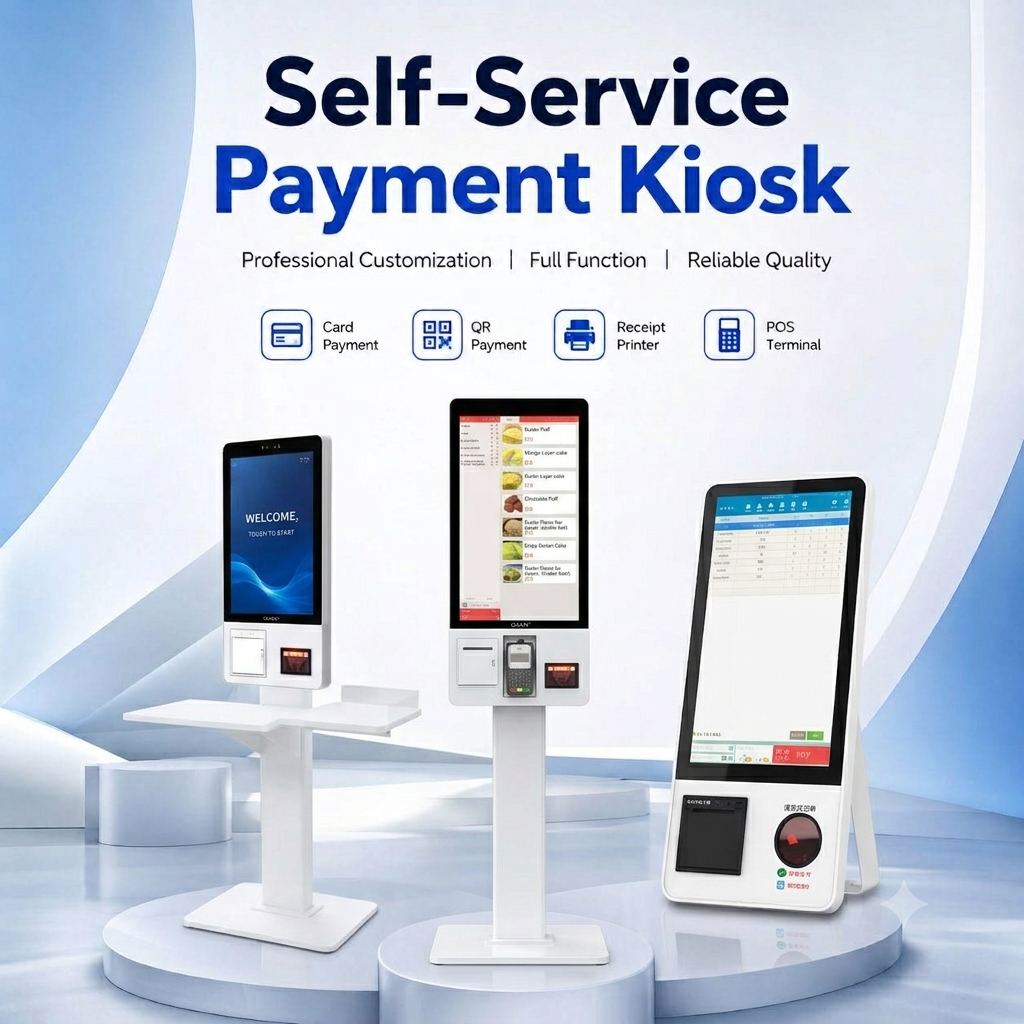
A modern supermarket self-service kiosk aggressively tackles modern labor shortages. It delivers profound labor optimization across your entire store footprint. You can implement a 1:4 or 1:6 staffing ratio efficiently. One employee comfortably supervises up to six checkout terminals simultaneously. You instantly free up personnel for critical restocking duties or customer assistance.
Kiosks also generate massive throughput for small baskets. They drastically reduce wait times for shoppers buying under fifteen items. Express lanes move rapidly when customers control the scanning pace. You also achieve incredible spatial efficiency. Store planners can fit multiple units into tiny spaces. Four kiosks easily replace a single traditional conveyor-belt lane. This densification maximizes your revenue per square foot.
Store managers must acknowledge several harsh implementation realities, however. The dreaded "shrink" factor remains the biggest structural hurdle. Self-checkout increases your vulnerability to accidental item mis-scans. It also opens clear avenues for intentional, organized theft. Shoppers sometimes swap barcode stickers or skip scanning high-value items entirely.
Hardware durability represents another massive operational challenge. High-traffic usage demands highly ruggedized, commercial-grade touch screens. Standard consumer tablets fail quickly in brutal grocery environments. You must establish rigorous, proactive maintenance schedules. Finally, watch out for hidden integration gaps. Fragmented data ruins operations if software ecosystems remain disconnected. Your kiosk must natively communicate with back-office inventory systems.
Let us objectively compare these competing checkout architectures. We use a standardized evaluation framework to analyze daily performance. This framework isolates specific operational metrics. We remove subjective bias from the hardware selection process entirely.
Evaluation Metric | Traditional POS System | Self-Service Kiosk |
|---|---|---|
Basket Size Optimization | Best for 20+ items, bulk goods, and un-barcoded produce. | Best for <15 items, quick trips, and packaged goods. |
Labor Dependency Ratio | Rigid 1:1 (One cashier per lane). | Flexible 1:6 (One host per six terminals). |
Floor Space Required | High (Requires long conveyor belts and bagging areas). | Low (Can group 4-6 units in the space of one traditional lane). |
Primary Security Method | Human oversight and manual inspection. | Integrated scales and AI overhead computer vision. |
Controlling inventory shrinkage demands layered security protocols. Traditional lanes rely entirely on human visual inspection. Cashiers manually check carts and verify ages using ID cards. Self-service terminals require highly sophisticated technological interventions. You must evaluate integrated security scale accuracy. These weight scales detect anomalies when unexpected items enter the bagging area.
Modern setups also utilize overhead computer vision cameras. AI-assisted cameras identify item swapping or ticket switching instantly. ID verification workflows for restricted goods must remain completely seamless. Terminals should instantly pause transactions and alert the zone host. The software must prevent the transaction from continuing until authorized personnel intervene.
Data silos destroy modern retail efficiency. You must ensure seamless omnichannel synchronization across all active terminals. Shoppers expect unified experiences regardless of the checkout lane they choose. Loyalty programs must update points instantly upon transaction completion. Digital coupons clipped on mobile apps must trigger identically across both setups.
Real-time inventory levels must deplete accurately across both formats. Disconnected systems cause massive inventory discrepancies. You risk advertising out-of-stock items to online grocery shoppers. A robust API infrastructure guarantees unified database polling. Every terminal should pull from one central truth source dynamically.
Analyzing raw throughput metrics reveals optimal lane configurations. You must track average transaction times based on basket size. Traditional lanes process large baskets much faster than average shoppers can. Cashiers memorize produce codes and scan heavy items rapidly. A sixty-item cart flows best through a traditional conveyor setup.
Conversely, self-checkout crushes traditional lanes on small baskets. A shopper holding three items processes their transaction almost instantly. Kiosks eliminate the idle waiting associated with conveyor belts. Store managers use these metrics to determine ideal deployment ratios. The data dictates exactly how many self-service units you actually need.
Modern retail rarely produces a single universal winner. The most resilient checkout strategy is a strategic hybrid compromise. You need hardware capable of fulfilling multiple distinct roles daily. A modern All In One POS architecture bridges this critical gap. These sophisticated machines offer screens that pivot mechanically.
Interfaces seamlessly toggle between dense cashier-facing layouts and simple self-service grids. Flexibility acts as your greatest operational weapon. You can adapt lane functions dynamically throughout the day. Run the machine as a standard register during quiet mornings. Flip the screen toward shoppers during intense holiday traffic spikes. You instantly double your self-service capacity without buying new hardware.
Staffing levels no longer dictate your maximum checkout availability. A unified backend software ecosystem powers this hybrid model perfectly. You consolidate comprehensive reporting into one clean administrative dashboard. Inventory management and payment processing share a single core engine. Everything lives under one cohesive software umbrella.
This architecture entirely eliminates the frustrating silo effect. You no longer battle disparate vendors blaming each other for software crashes. Unified hardware simplifies staff training dramatically. Employees learn one operating system regardless of their assigned daily role.
Deploying new hardware requires a methodical, step-by-step approach. Rushing the process guarantees frustrated staff and angry shoppers. Follow this structured roadmap to guarantee a smooth transition.
Store Footprint Audits: Begin by mapping your current queue flow accurately. Identify the absolute ideal real estate for self-service zones. Compare this carefully against your traditional conveyor belt requirements. Ensure you leave adequate space for shopping cart navigation and handicap accessibility.
Phased Deployment: Never replace everything overnight. Run isolated pilot programs in your highest-traffic locations first. Monitor these test zones meticulously before attempting chain-wide rollouts. Gather direct feedback from your floor staff immediately to tweak software settings.
Staff Repurposing: Hardware upgrades should reallocate labor, not eliminate it entirely. Train your former cashiers to become proactive Self-Checkout Hosts. They must learn how to troubleshoot simple hardware errors rapidly. They check IDs and mitigate shrink without alienating honest shoppers. This role requires a unique blend of hospitality and security awareness.
Shortlisting Vendors: Ask prospective hardware providers extremely tough questions. Demand written guarantees regarding their API openness. Inquire deeply about their specific hardware warranty terms. Ask for case studies proving high average uptime metrics. Choose partners who specialize specifically in rugged retail environments.
When interviewing potential hardware partners, you should prioritize technical transparency. Key questions to ask your prospective vendors include:
Does this hardware feature commercial-grade, spill-resistant capacitive touchscreens?
Can the software natively integrate into our existing inventory management APIs?
What is the guaranteed service-level agreement (SLA) for rapid hardware replacements?
Does the terminal natively support peripheral expansions like AI overhead cameras?
There is no universal winner in the checkout debate. Supermarkets experiencing high foot traffic lean heavily toward self-service. Their shoppers carry smaller baskets and demand instant exit speeds. Conversely, large-format grocers absolutely require strong traditional conveyor lanes. Their shoppers buy bulk items requiring expert cashier assistance.
Adopting a hybrid hardware framework is your smartest strategic move. It forcefully mitigates the inherent risks of both operational extremes. It future-proofs your store layout against shifting consumer demographics. You gain the agility to pivot operations based on daily realities.
Take immediate action to improve your frontline operations. Audit your current peak-hour queue times this week. Analyze your ongoing labor scheduling allocations. Then, request a comprehensive technical demonstration of unified point-of-sale solutions. Seeing the hardware toggle smoothly between modes will clarify your purchasing decision.
A: Yes, but they reallocate rather than eliminate labor entirely. You shift staff from strict 1:1 scanning to 1:6 supervisory hosting. This strategy reduces the overall hours you must schedule. It achieves this while maintaining or even improving total store throughput.
A: If you utilize disparate vendors, kiosks often suffer frustrating sync lags. Enterprise-grade setups solve this by using a single cloud backend. Both traditional registers and self-service endpoints pull from the exact same real-time database. This guarantees perfectly synchronized inventory management.
A: You must employ a comprehensive, layered security approach. Combine integrated weight scales with AI-assisted overhead computer vision cameras. Additionally, you must strategically station highly visible employee hosts. Human presence remains the most effective deterrent against intentional shrink.
A: Yes, provided the hardware is strictly commercial-grade. You need spill-resistant, capacitive touchscreens encased in ruggedized housing. These specific machines are engineered for brutal high-volume retail environments. Standard consumer-grade tablet systems will fail quickly under supermarket conditions.


